
WELCOME BONUS 300%
UP TO €2000 + 100
FREE SPINS
UP TO €2000 + 100
FREE SPINS
Home → Blackjack
Blackjack at Eternal Slots Casino: Variants, Rules and Payouts
Continuous Shuffling Machine shuffles after each round
Blackjack Party by Evolution operates with a continuous shuffling mechanism that reshuffles the deck after every single hand dealt to the players at the table. This mechanical process ensures that card counting strategies become statistically impossible, as no memory of previous cards remains in the shoe for future rounds. Players betting between 1,00 EUR and 1.000 EUR must rely solely on basic strategy rather than tracking techniques to maintain their edge. The constant re-mixing effectively resets the house advantage to its base level for every new transaction.
Lightning Blackjack also utilizes a fresh shuffle configuration managed by Evolution to accommodate unlimited player seats and random lightning multipliers up to 25x. Unlike traditional shoes that run for several hands, this digital integration requires immediate reseating of probability weights after each outcome is resolved. The RTP of 99.56% is calculated assuming optimal play within these strict reshuffling constraints without any card tracking benefits. This high-frequency shuffle protects the casino's mathematical model from skilled players attempting to exploit streaks.
Quantum Blackjack Plus Live by Playtech employs a similar rapid-cycle shuffling protocol to support quantum multipliers reaching 1.000x on three-card combinations totaling 21 points. The system demands a full reset of the deck composition after every wager cycle to ensure the integrity of the high-volatility side bets. Betting limits range from 1 to 5.000 EUR, requiring robust security measures against pattern recognition during the brief dealing intervals. The technical requirement for instant shuffling eliminates any possibility of hole-card exposure or sequential prediction.
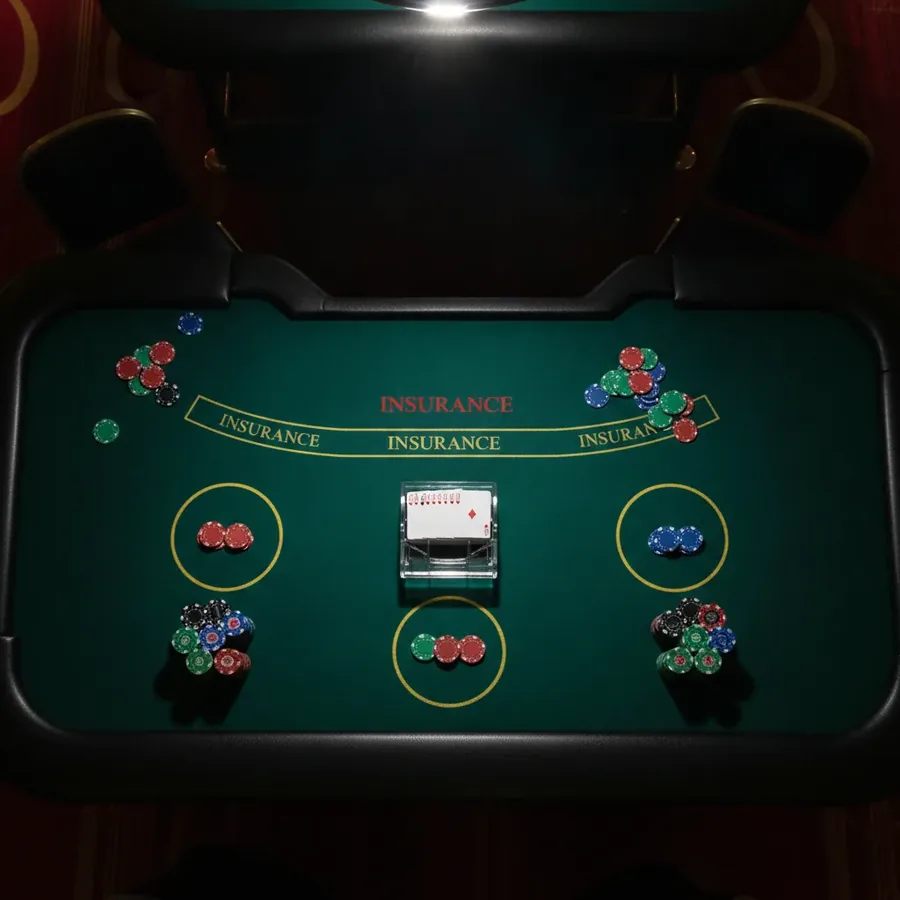
Blackjack doesn't count for every bonus offer
The welcome bonus of 300% up to 2,000 EUR explicitly excludes table games from contributing toward the mandatory turnover requirements for withdrawal eligibility. Only slot machines generate a 100% contribution rate toward clearing the bonus funds, meaning blackjack wagers provide zero progress on the wagering metric. A player depositing 100 EUR receives a 300 EUR bonus but must generate 4,000 EUR in slot turnover before cashing out any winnings. This restriction forces all table game activity into separate bankroll management distinct from the promotional capital.
Insurance bets in Blackjack Insurance, which pay 2:1 when the dealer shows an Ace, are classified as side wagers that fall under the excluded category alongside main hands. These specific bets do not assist in meeting the rollover conditions attached to the free spins or deposit match offers provided by the operator. Since insurance carries a house edge of 7.47%, it is already a mathematically unfavorable proposition that yields no promotional benefit. Players using this side bet are essentially burning funds without advancing their account status toward unlockable cash.
Live dealer variants such as Quantum Blackjack Plus Live and Lightning Blackjack remain strictly prohibited from counting toward any bonus conversion metrics due to their live nature. The RTP figures of 99.57% and 99.56% respectively indicate fair odds, yet the operational costs prevent these tables from supporting promotional liabilities. Wagers placed at stakes between 1.000 EUR and 5.000 EUR on these platforms are entirely ignored by the bonus tracking algorithm. Consequently, high rollers seeking to clear large bonuses must direct their volume exclusively to the eligible slot portfolio.
Bust at 22: Stake Lost Immediately
Standard rules in Liberal Vegas Strip dictate that any hand exceeding 21 points results in an automatic loss of the entire stake regardless of subsequent dealer outcomes. This immediate bust condition applies universally across all 6 to 8 deck variations unless specific surrender options are exercised before the total exceeds the limit. Players holding a hard 16 against a dealer 10 face a forced hit scenario where any card valued 6 or higher guarantees total forfeiture. The house edge of 0.28% reflects the frequency of these unavoidable bust events compared to successful stands.
Insurance wagers in Blackjack Insurance operate under a different bust logic where the main stake remains active while a separate side bet covers the dealer potential Ace. If the dealer does not possess a ten-value card, the insurance payout of 2:1 offsets the loss of the original wager only if the main hand wins. However, if the player has already busted on the initial deal, the insurance bet is settled independently and cannot recover the primary stake. This separation ensures that poor initial drawing decisions result in complete financial loss without secondary mitigation.
Late Surrender allows players to forfeit half their bet before checking for a dealer blackjack, providing a mathematical escape from certain bust scenarios in Liberal Vegas Strip. This rule reduces the house edge by 0.08 percentage points by allowing exit from hands where the probability of busting exceeds 50%. Without this option, players must commit to hitting soft totals that frequently degrade into hard totals destined for immediate failure. The availability of surrender transforms marginal hands from guaranteed losses into manageable expenses preserving capital for future rounds.
Double Down vs Simple Hit on 11
Doubling down on a total of 11 is the statistically superior move in Liberal Vegas Strip because it maximizes expected value against dealer up-cards ranging from 2 through 10. By risking double the original stake, typically 2 units instead of 1, the player captures additional profit when drawing a ten-value card resulting in a strong 21. Basic strategy mandates this aggressive action because the probability of improving an 11 to a winning total exceeds 30% in most deck compositions. Simple hitting leaves significant money on the table by accepting a lower return on investment for the same risk profile.
Resplit Aces (RSA) improves the doubling opportunity by allowing players to split pairs of Aces and then double down on the newly created hands if advantageous. This rule contributes a negative 0.08 percentage points to the house edge, making the doubling strategy on 11 even more profitable over the long term. In contrast, games prohibiting RSA force players to stick with single cards after splitting, reducing the overall yield from favorable starting positions. The ability to double after split creates multiple high-value betting opportunities from a single initial wager.
Dealer standing on Soft 17 (S17) significantly enhances the effectiveness of doubling on 11 because the dealer is less likely to improve their hand with a draw. This favorable dealer rule reduces the house edge to 0.28% compared to higher edges in H17 variants where the dealer hits soft totals. When combined with Double After Split (DAS), which offers a further 0.14 percentage point reduction, the mathematical advantage shifts noticeably toward the player. Rejecting the double-down option on 11 in these specific conditions represents a fundamental error in basic strategy execution.
Surrender vs Playing Out on 16 vs 10
Late Surrender on a hard 16 against a dealer 10 allows the player to retain 50% of their stake rather than facing the high probability of losing the entire amount. This strategic concession reduces the house edge by 0.08 percentage points, transforming a near-certain loss into a manageable expense that preserves bankroll longevity. Without surrender, the player must hit or stand, both of which yield negative expected values worse than simply walking away with half the chips. The immediate return of 50% of the wager provides a statistical buffer against the dealer's strong up-card.
Playing out a 16 against a 10 without surrender exposes the player to a bust risk exceeding 60% if they choose to hit, while standing yields a win rate below 25%. The decision to fight the hand results in an average loss of nearly the full stake, whereas surrender caps the damage at exactly half the original bet. In games lacking late surrender, this specific matchup becomes one of the most costly scenarios in blackjack due to the inability to mitigate losses early. The mathematical expectation favors preservation over confrontation in this precise configuration.
Early Surrender, though rare in modern online casinos, offers a superior reduction in house edge of up to 0.6 percentage points by allowing exit before checking for dealer blackjack. This variant permits surrender even when the dealer holds an Ace, preventing the loss of the entire stake in cases where the dealer later reveals a natural twenty-one. Late surrender restricts this privilege until after the dealer checks, potentially costing the player their full bet if they hold a 16 and the dealer has blackjack. The distinction between early and late timing directly impacts the long-term profitability of surrendering weak hands.
Blackjack variants at a glance
| Variant | Payout | House edge | Rule | Bet range |
|---|---|---|---|---|
| Blackjack Liberal Vegas Strip (liberale Regeln, 3:2) | 99.72% | 0.28% | Günstigste Regelkombination: S17 + DAS + Resplit + Late Surrender. Standardabweichung 1,15 | Blackjack 3:2, Gewinn 1:1 |
| Blackjack Insurance / Versicherung (6–8 Decks) | 92.53% | 7.47% | Separate Nebenwette bis 50% der Hauptwette, wenn der Dealer ein Ass hat. Basisstrategie schreibt IMMER Ablehnung vor (außer Karten zählen bei True Count ≥ +3). Bei einem Deck Vorteil ≈ 5.88% | Insurance 2:1 |
| Blackjack Split / Double / H17 – Regel-Effekte | n.a. (Regel-Modifikatoren) | H17 +0.22 Prozentpunkte; RSA −0.08 Prozentpunkte; DAS −0.14 Prozentpunkte | Dealer Hits Soft 17 verschlechtert RTP um 0.22 Prozentpunkte; Resplit Aces verbessert um 0.08 Prozentpunkte; Double After Split verbessert um ca. 0.14 Prozentpunkte; 6 Decks statt 8 – ca. 0.02 Prozentpunkte. | Double – Einsatz ×2 mit einer Karte; Split – bis 4 Hände; Ass-Split meist mit einer Karte. |
| Blackjack Surrender (Late Surrender) – Regel-Effekt | n.a. (Regel-Modifikator) | −0.08 Prozentpunkte | Spieler gibt Hand nach Dealer-Blackjack-Prüfung auf, verliert die Hälfte des Einsatzes. Verbessert RTP um ca. 0.08 Prozentpunkte. Early Surrender ist wesentlich wertvoller (bis −0.6 Prozentpunkte), aber extrem selten. | Rückzahlung 50% des Einsatzes |
| Blackjack Auszahlung 6:5 statt 3:2 (6 Decks) | 98.15% | 1.85% | Ersatz von 3:2 durch 6:5 fügt exakt +1.39 Prozentpunkte zum Vorteil des Casinos hinzu – stärker als jede andere Regeländerung. Bei $10 Einsatz zahlt Blackjack $12 statt $15. | Blackjack 6:5, Gewinn 1:1 |
| Blackjack Ein Deck, klassische Regeln, 3:2 | 99.85% | 0.15% | Weniger Decks = niedrigerer Vorteil; ein Deck gibt ca. −0.48 Prozentpunkte gegenüber 8 Decks. Oft durch 6:5 Auszahlung kompensiert. | Blackjack 3:2, Gewinn 1:1 |
Splitting costs double bet: plan budget
Blackjack Split allows players to divide pairs into up to four separate hands, effectively doubling or tripling the initial wager on each new hand. This rule interaction increases the total capital at risk during a single round compared to playing a single unified hand without splits. Players must ensure their session bankroll can sustain these higher variance bets without depleting funds too quickly.
The ability to Resplit Aces improves the Return to Player (RTP) by approximately 0.08 percentage points, offering a slight mathematical advantage to the player. However, this benefit is often offset by the increased volume of money wagered when multiple hands are active simultaneously. Understanding this trade-off helps in managing expectations regarding long-term returns versus short-term volatility.
Bet two percent of bankroll per hand
A standard deviation of 1.15 for Blackjack Liberal Vegas Strip indicates moderate volatility, requiring careful bankroll management to withstand losing streaks. Betting two percent of the total bankroll per hand provides a buffer against this statistical variance while maintaining engagement with the game. This conservative approach aligns with the house edge of 0.28 percent, ensuring longer playtime for beginners.
Insurance is a side bet paying 2:1 if the dealer has a blackjack, but it carries a house edge of 7.47 percent which severely reduces overall RTP. For a bankroll managed at two percent per main bet, adding insurance creates an inefficient allocation of capital that drains funds faster. Strictly avoiding this side bet preserves the theoretical value of the primary blackjack wager.
Chose Wrong Table for 5 EUR Bankroll
Lightning Blackjack from Evolution accepts bets between 1 and 2,500 EUR, making the minimum stake inaccessible for a 5 EUR bankroll strategy. The high variance introduced by Lightning multipliers up to 25x requires significant capital to survive the inevitable dry spells before a big win occurs. Beginners with limited funds should avoid such high-limit tables to prevent immediate bankruptcy.
Quantum Blackjack Plus Live by Playtech offers Quantum multipliers up to 1,000x on three-card combinations, but the minimum bet also exceeds small budgets. With an RTP of 99.57 percent under optimal strategy, the table is mathematically sound but financially out of reach for low-roll players. Selecting tables with lower minimum stakes ensures the bankroll lasts long enough to experience the theoretical return.
What Peek Means with a Dealer Ace
When the dealer shows an Ace, they typically peeks for a natural blackjack before players make decisions like splitting or doubling down. If the dealer has blackjack, all main bets lose immediately unless the player also has a blackjack, resulting in a push. This rule protects players from losing additional funds on split hands when the dealer already holds a winning hand.
Side Bets Increase House Edge to 5 Percent
Blackjack Surrender (Late Surrender) allows players to forfeit half their bet after the dealer checks for blackjack, improving RTP by about 0.08 percentage points. This specific rule modification is far less valuable than Early Surrender, which can reduce the house edge by up to 0.6 percent. Relying solely on late surrender does not significantly mitigate the impact of poor side bet choices.
Even Money only possible with Dealer Ace
The Insurance side bet in Blackjack offers a 2:1 payout when the dealer shows an Ace. This separate wager covers up to 50% of the main stake, but its RTP drops significantly to 92.53%. The house edge for this specific bet rises sharply to 7.47%, making it a poor long-term investment.
Basic strategy dictates that players must always reject insurance unless they are counting cards with a True Count of +3 or higher. Without advanced techniques, the statistical disadvantage remains substantial for the average player. A single-deck game might lower this edge slightly to approximately 5.88%, yet it still lags behind standard play.
For beginners, the mathematical expectation clearly favors declining the even-money offer on every hand. Accepting insurance turns a favorable situation into a negative one due to the high house cut. The optimal move preserves bankroll by avoiding the 7.47% erosion associated with this side bet.
Early Surrender is removed from many tables
Late Surrender allows players to forfeit their hand after the dealer checks for blackjack, recovering 50% of the original stake. This rule modifier improves the overall RTP by approximately 0.08 percentage points compared to games without surrender options. It provides a safety net against strong dealer up-cards like an Ace or Ten.
Early Surrender is far more valuable, potentially reducing the house edge by up to -0.6 percentage points by allowing exit before the dealer checks. However, this superior rule is extremely rare in modern online casino environments and digital table layouts. Most platforms have replaced it with the less generous late version or removed it entirely.
The absence of early surrender increases the cost of playing for beginners who cannot adjust their strategy perfectly. Without this escape valve, players must commit fully to hands that are statistically doomed against a dealer's strong position. The 0.08 point gain from late surrender is minimal compensation for losing the earlier exit option.
Blackjack Contributes Only 10 Percent to Wagering
The welcome bonus at Eternal Slots Casino offers 300% up to €2,000 plus 100 free spins for new registrants. Table games like Blackjack contribute only 10% toward meeting the wagering requirements attached to this promotional package. Slots count fully at 100%, creating a significant disparity in progress speed between game types.
A €1,000 bonus requires €40,000 in total turnover if played exclusively on slots, as each euro counts completely. Playing the same bonus via Blackjack means only €100 of every €1,000 wagered reduces the requirement, demanding €400,000 in total bets. This tenfold increase makes clearing the bonus through table games practically unfeasible for most users.
The 10% contribution rate effectively multiplies the time and capital needed to unlock withdrawable funds. Beginners often underestimate this multiplier, expecting equal progress regardless of the game selected. The restriction forces players onto slots where the higher contribution aligns with the casino's revenue model.
The low contribution percentage acts as a hidden barrier to withdrawing bonus funds via strategic table play. Players relying on basic strategy in Blackjack will find their progress stalled compared to slot enthusiasts. The terms favor high-volume slot consumption over calculated card game sessions.
One Deck vs Eight Decks in House Edge
Classic single-deck Blackjack with standard rules delivers an impressive RTP of 99.85% and a house edge of just 0.15%. Fewer decks reduce the probability of drawing specific cards, slightly improving the player's odds compared to multi-deck shoes. This variant represents one of the most favorable conditions available in traditional blackjack formats.
Eight-deck games typically carry a higher house edge due to increased card composition complexity and reduced flexibility. Switching from eight decks to six decks improves the RTP by approximately 0.02 percentage points, offering a marginal benefit. However, this small gain is often negated by other restrictive rule changes found in multi-deck variants.
The difference of roughly 0.48 percentage points in favor of single-deck games highlights the impact of deck count on edge. Many casinos compensate for this advantage by altering payout structures, such as reducing wins to 6:5 instead of 3:2. This adjustment adds exactly +1.39 percentage points to the house edge, completely overriding the deck-count benefit.
Beginners should prioritize finding single-deck games with 3:2 payouts to maximize their theoretical return. Relying on multi-deck tables with favorable deck counts but poor payouts results in a net loss. The combination of deck number and payout ratio determines the true cost of play more than either factor alone.
Card Counting at Shuffle Master Table: why it fails
Modern digital and live tables often utilize continuous shuffling machines or frequent shoe changes that neutralize counting advantages. The Shuffle Master technology ensures that the deck composition resets regularly, preventing counters from tracking card ratios effectively. This mechanical intervention eliminates the statistical drift that card counters rely upon for an edge.
Live dealer variants like Lightning Blackjack or Quantum Blackjack Plus use random number generators or physical shuffles that reset after every hand or round. Multipliers up to 25x or 1,000x are applied randomly, further obscuring any predictable patterns in card distribution. The RTP remains stable around 99.56% to 99.57% regardless of previous outcomes, rendering history irrelevant.
Attempting to count cards in these environments yields no predictive power because the deck is never held in a static state. The house edge remains constant at approximately 0.46% to 0.54% depending on specific rules, unaffected by past hands. Beginners seeking an advantage through tracking will find their efforts futile against automated reshuffling protocols.
The structural design of these tables prioritizes randomness and pace over the deep penetration required for counting. Even skilled players cannot overcome the mechanical reset intervals imposed by the software or hardware. The only viable strategy remains adhering to basic probability rather than attempting to predict future draws.
Contact
Live - online chat
Banking









Providers












Eternal Slots Casino 2026